Sunflower Coconut| Spot That Fire V3.0
Team Updates
Computer Vision Log: Conclusion
To summarise work done in CV for this project:
- Preparing a dataset: we create a binary classification dataset (fire vs no-fire images) using [1], [2], [3] and OpenCV (to get frame-by-frame output of fire videos), then split data using 8:2 train-testsplit, and further augment training images using Albumentations (HorizontalShift, ShiftScaleRotate, ElasticTransform) to 23k images
- Architecture search: we conduct a literature review on existing classification models (ResNet, MobileNet, VGGNet and more) and chose Efficient-Net for its state-of-the-art performance while utilising fewer parameters, balancing speed, resources and accuracy
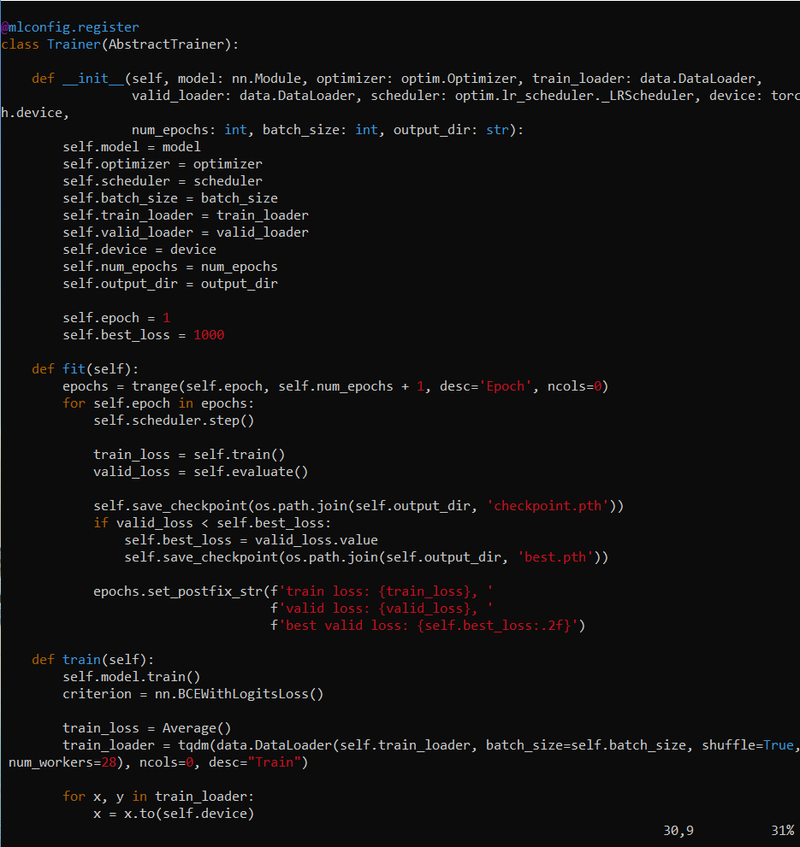
- Creating a model: we redesign [4]'s training and model configuration code and add in our own dataset, in order to perform custom training of Efficient-Net on our compiled fire dataset. Due to time limitations and consideration for real-time inference, we utilise the Efficient-Net-b0 network
- Training: We perform training using 8 Titan X GPUs in parallel, using a batch size of 256. We apply transferlearning by fine-tuning pre-trained Efficient-Net weights on the ImageNet benchmark, training for 80 epochs (leaning_rate decay at 20,40,60 epochs, using SGD optimiser). Training took 2:42:55 hours
- Evaluation: After completing training, we performed evaluation on the test set and achieved an accuracy of 93% based on the torch.BCEWithLogitsLoss evaluation metric
References:
[1] http://web.mit.edu/torralba/www/indoor.html
[2] https://www.kaggle.com/arnaud58/landscape-pictures
[3] https://github.com/DeepQuestAI/Fire-Smoke-Dataset
[4] https://github.com/narumiruna/efficientnet-pytorch
Computer Vision Log: Part 2
We did it! We now have a model which runs in real-time which uses AI to detect fires! Granted, it's not 100% accurate, but with more data and more training, this can be applied in real-life to spot that fire!
Computer Vision Log: Part 1
After pulling an all-nighter of programming, we've finally created and trained an Artificial Intelligence model for the automatic, real-time detection of fires! We leverage the Efficient-Net model, which achieves state-of-the-art performance on the ImageNet benchmark for this task, striking a balance between detection accuracy and speed. We utilised the PyTorch library and trained on Titan X GPUs in parallel, which took 2:42:55 hours!
We are now working to integrate the model with OpenCV, in order to perform detection in real-time on our own webcams!!