
Mission to Planet Earth: A Digital History
Planet -amazing world
Summary
As this is new for me to plot amazing world, My project would show the relation between people and the life in space, now we have technology and skilled scientist to explore the kingdom of universe. science is boon that gives us multiple ways to research in Similar way our dream project will provide history with digital existence.
How We Addressed This Challenge
The Sun, we can call it as home planet because without sun anyone can't survive.
Initially is was just ball of fire.
This is spaceship launched to provide atmosphere data
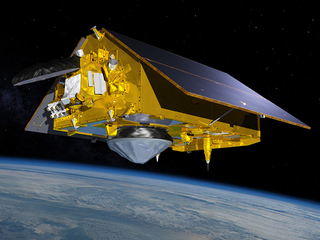
While Earth is only the fifth largest planet in the solar system, it is the only world in our solar system with liquid water on the surface. Just slightly larger than nearby Venus, Earth is the biggest of the four planets closest to the Sun, all of which are made of rock and metal.
The name Earth is at least 1,000 years old. All of the planets, except for Earth, were named after Greek and Roman gods and goddesses. However, the name Earth is a Germanic word, which simply means “the ground.”
How We Developed This Project
Teamwork help me to develop my ideas.
How We Used Space Agency Data in This Project
It can be used for knowing base of creature.
Project Demo
Our ability to predict the weather, though still imperfect, would astound our ancestors. And decades of improvements in weather satellite technology, driven by teams of fiercely dedicated scientists and engineers, have made that possible. In this video, we talk to some of the pioneers in the field who were behind advances in that technology, advances that now inform our planning and daily commutes, but also farming, construction projects, military strategy, disaster response and travel by air and sea. We also talk to scientists who are working on today’s weather satellites and instruments, like those in the Joint Polar Satellite System (JPSS) and the Geostationary Operational Environmental Satellite (GOES) series. This video tells the story of our nation’s weather satellites by highlighting some of the paradigm-shifting moments that shaped their rich history. Music: "Wonderous Planet," Corbett and Wilkie; "Discovering Galaxies," Lethbridge; "Mysteries of the Sea," Lethbridge; "Feathered Migration," Salisbury; "Drifting Sands," Lethbridge; "Our Beautiful Earth," Lethbridge; "Endless Vista," Tzur; "Insights," Coon and Goebel; all via Universal Production Music Video credit: NASA's Goddard Space Flight Center; John F. Kennedy footage courtesy of the John F. Kennedy Library Foundation Jefferson Beck (USRA): Lead Producer Jenny Marder Fadoul (Telophase): Lead Writer Greg Mandt (NOAA-JPSS): Lead Scientist Bill Smith (Hampton University): Lead Scientist Eugenia Kalnay (UMD): Lead Scientist Edward Kim (NASA/GSFC): Lead Scientist Louis Uccellini (NOAA/NWS): Lead Scientist This video is public domain and along with other supporting visualizations can be downloaded from NASA Goddard's Scientific Visualization Studio at: https://svs.gsfc.nasa.gov/13685 If you liked this video, subscribe to the NASA Goddard YouTube channel: https://www.youtube.com/NASAGoddard Follow NASA’s Goddard Space Flight Center · Instagram http://www.instagram.com/nasagoddard · Twitter http://twitter.com/NASAGoddard · Twitter http://twitter.com/NASAGoddardPix · Facebook: http://www.facebook.com/NASAGoddard · Flickr http://www.flickr.com/photos/gsfc
 5 Things That Changed Weather For...
 NASA Names Upcoming Telescope to ...
 Apollo 13 Views of the Moon in 4K
 XMM-Newton Celebrates 20 Years in...
 How NASA Will Protect Astronauts ...
Data & Resources
- Nasa website
- my own views
- Nasa you tube videos
- Facebook updates