
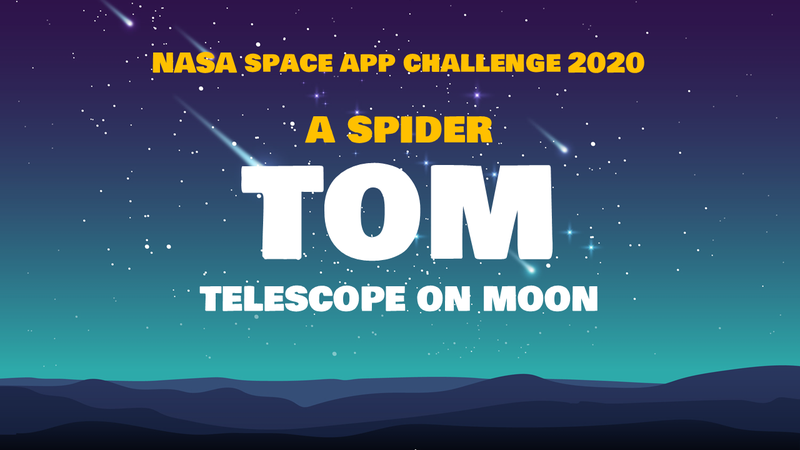
1."A Spider TOM" (Telescope On Moon)| Hey! What Are You Looking At?
Team Updates

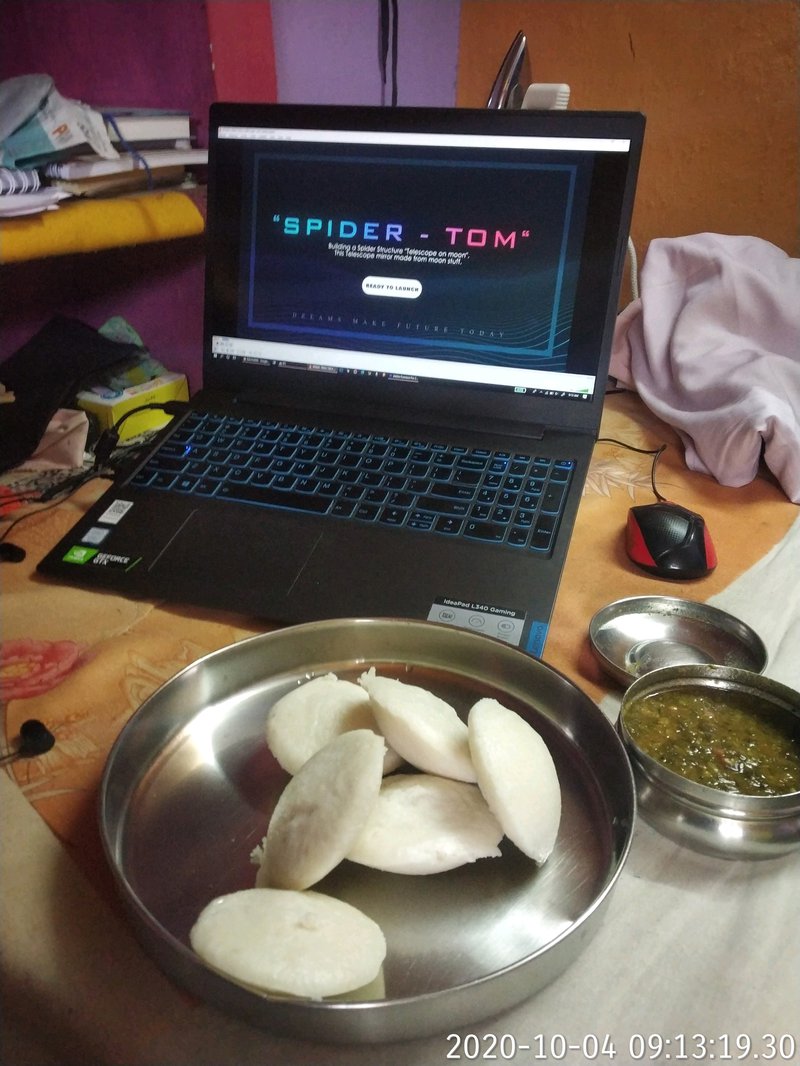
Feeling sad about final result😞.
 Ajay Gangadharan
 Ajay Gangadharan
 Ajay Gangadharan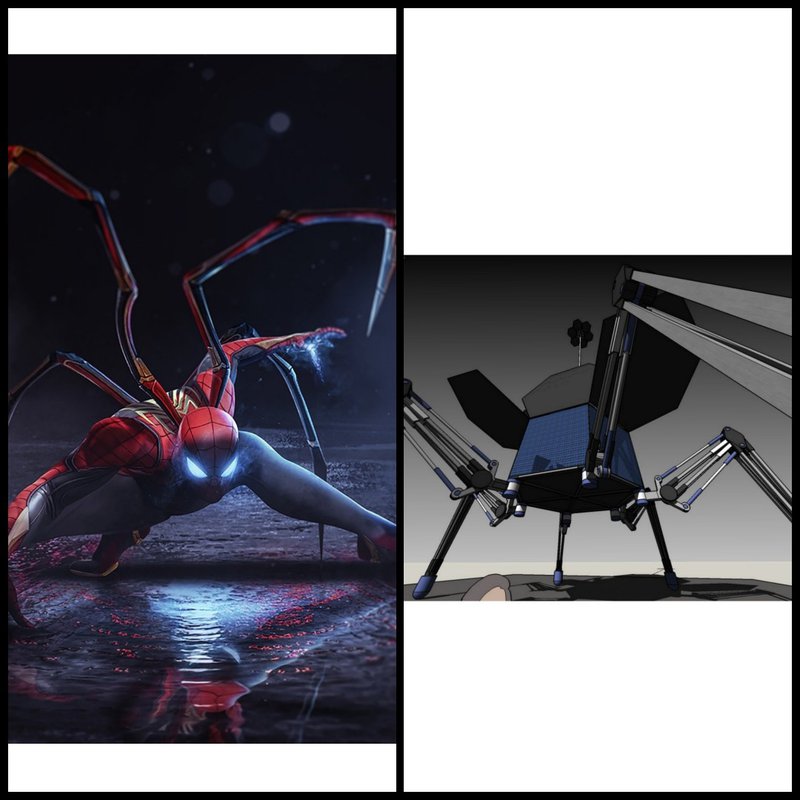
 Pratheek v salian
Implications
- Socially :
- TOM will open our eyes to the universe. It's also help us to find our neighborhood on interstellar space.
- Multidecade programs to explore the planets, build and operate large space telescopes and space stations,
- take humans to the moon and another planets
- Taking action on climate change
- Increasing power source and future technology
- Move to another planet
- Politically :
- Compare to another country, Increase our nation value in space race.
- friendship of another country and protective of nation
- increasing the population
- creating new type of material
- increasing power sources
- Economically :
- We could build a less expensive and large telescope on the moon with 80% of Moon stuffs.
- Less maintenance Require.
- increasing value of money
- less investment more efficiency
- innovation of business growth
- less investment’s increasing space industry
 Vishwesvaran Sundar
 Vishwesvaran Sundar
Helium 3
He3 is naturally produced through fusion in the sun
Settles on the moon’s surface
Earths atmosphere repels He3 from settling on its surface
He3 combined with deuterium produces energy
There is 10 times more energy in He3 than in all of the fossil fuels on Earth (oil, coal, natural gas)
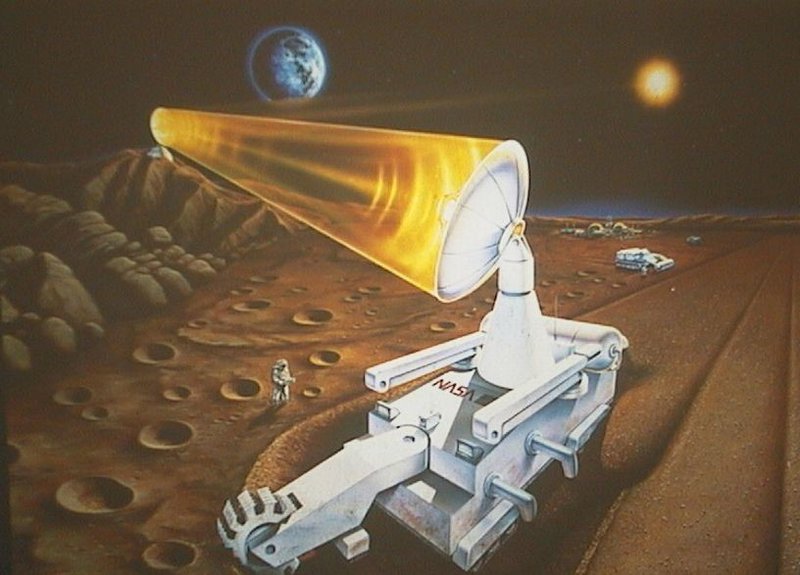
Artist's rendition of He3 mining machine
Using direct sun energy, He3 particles
will then be heated to about 1400 degrees
1400 degrees is the required temperature to convert He3 to usable energy
Transport energy to Earth
Microwave shot or via spacecraft
Vishwesvaran Sundar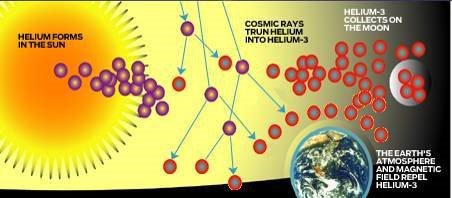 Vishwesvaran Sundar
power
• Always facing the sun, panels convert sunlight into electricity to power the observatory
• Telescope's 20-foot solar array will provide all the power the observatory needs
• will stay energy-efficient more than 1 million miles (1.5 million kilometers) from Earth
• The solar array is made up of five panels that are hinged
• main observatory for one of the final times before launch
• Webb will only use 1 kilowatt of power on moon
Vishwesvaran Sundar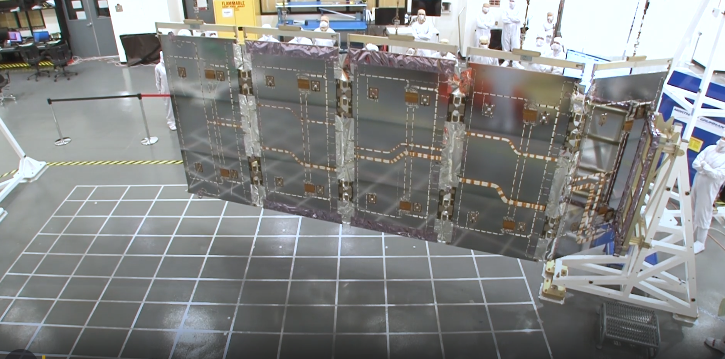 Vishwesvaran Sundar
Power source system
· Two way power source
o Solar power source
o Alternate power source (helium 3)
Vishwesvaran SundarBackplane structure
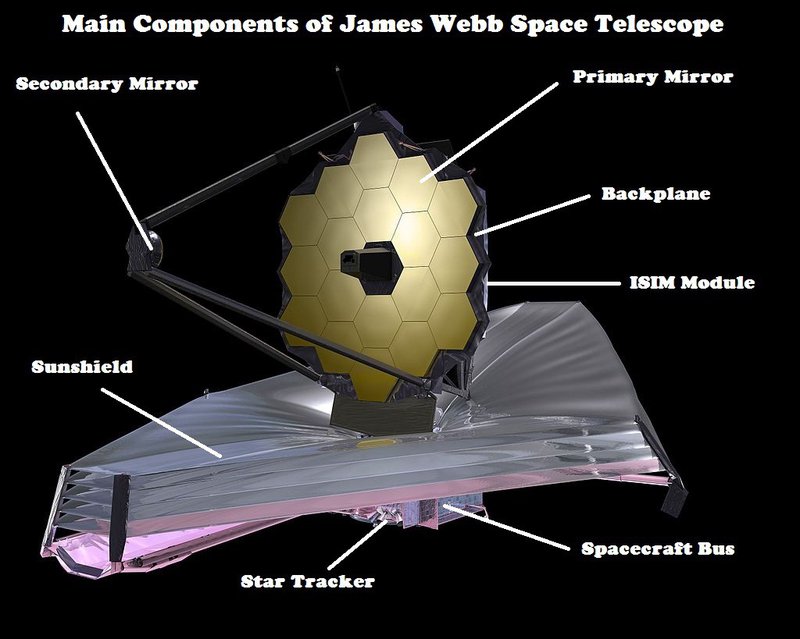
• Large structure that holds and supports
• The big hexagonal mirrors of the telescope.
• Using lightweight graphite materials and advanced manufacturing techniques
• Thermal stability performance at temperatures colder than minus 400 degrees F (minus 240 C).
• It must carry not only the 6.5 meter (over 21 foot) diameter primary mirror plus other telescope optics but also the entire module of scientific instruments.
• All told, the backplane carries more than 2400kg (2 1/2 tons) of hardware.
• Steady down to 32 nanometers, which is 1/10,000 the diameter of a human hair!
• The telescope’s beryllium mirrors are held together nearly motionlessly in space by the backplane,
• Backplane has to hold the telescope mirrors steady, to allow them to focus.
Vishwesvaran Sundar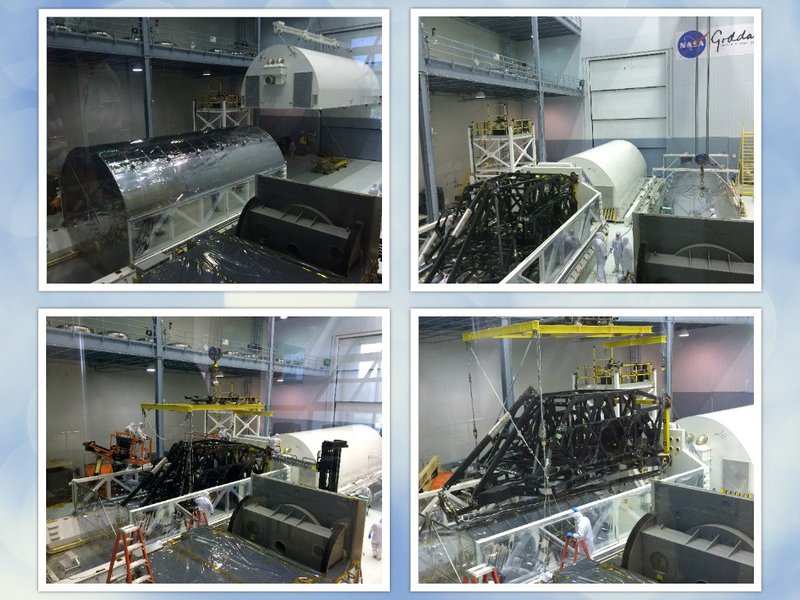 Vishwesvaran Sundar
Spacecraft bus
• Contains most of the spacecraft steering and control machinery, including the computer and the reaction wheels
• Provides the necessary support functions for the operation of the observatory.
• Maintains the operating temperature
• It contains six major spacecraft subsystems:
• Electrical Power Subsystem,
• Altitude Control Subsystem,
• Communication Subsystem,
• Command and Data Handing Subsystem,
• Propulsion Subsystem,
• Thermal Control Subsystem
Electrical Power Subsystem
The Electrical Power Subsystem converts sunlight shining on the solar array panels into the power needed to operate the other subsystems in the bus as well as the Science Instrument Payload.
Attitude Control Subsystem
The Attitude Control Subsystem senses the orientation of the Observatory, maintains the Observatory in a stable orbit, and provides the coarse pointing of the Observatory to the area on the sky that the Science Instruments want to observe.
Communication Subsystem
The Communication Subsystem is the ears and mouth for the Observatory. The system receives instructions (commands) from the Operations Control Center and sends (transmits) the science and status data to the OCC.
Command and Data Handling (C&DH) System
The Command and Data Handling (C&DH) System is the brain of the spacecraft bus. The system has a computer, the Command Telemetry Processor (CTP) that takes in the commands from the Communications System and directs them to the appropriate recipient. The C&DH also has the memory/data storage device for the Observatory, the Solid State Recorder (SSR). The CTP will control the interaction between the Science Instruments, the SSR and the Communications System
Propulsion System
The Propulsion System contains the fuel tanks and the rockets that, when directed by the Attitude Control System, are fired to maintain the orbit.
Thermal Control Subsystem
The Thermal Control Subsystem maintains the operating temperature of the spacecraft bus.
Vishwesvaran Sundar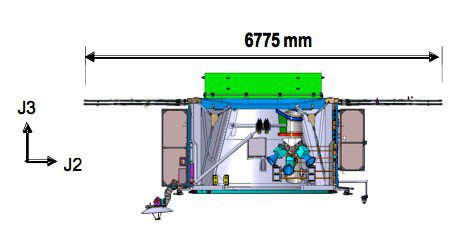 Vishwesvaran Sundar
Star trackers
• Use guide stars for pointing of the telescope.
• This makes it a good laser pointer
• 532 nm wavelength
• The target appears in the field of views of the intended instrument.
• Small telescopes that use start patterns to target the observatory
• measures the positions of stars using photocells or a camera
• The computer also controls the pointing and moment of the spacecraft
Vishwesvaran Sundar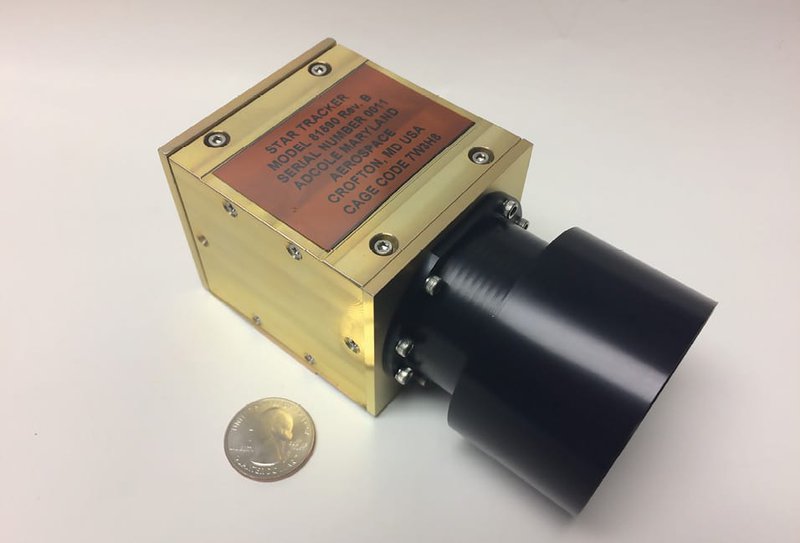 Vishwesvaran Sundar
Sun shield
• The five-layer sunshield keeps sunlight from interfering with the sensitive
• Each successive layer of the sunshield is cooler than the one below.
• Reduces some of a star's radiation
• shiny silver material of the five-layer sunshield
• observatory into a warm,
• sun-facing side (thermal models show the max temperature of the outermost layer is 383K or approximately 230 degrees F or 109.85 degrees Celsius)
• a cold side (with the coldest layer having a modeled minimum temp of 36K or around -394 degrees F or 201 degrees Celsius).
• The telescope operates under 50K (~-370F)
• protect the telescope from external sources of light and heat (like the Sun, Earth, and Moon)
Vishwesvaran Sundar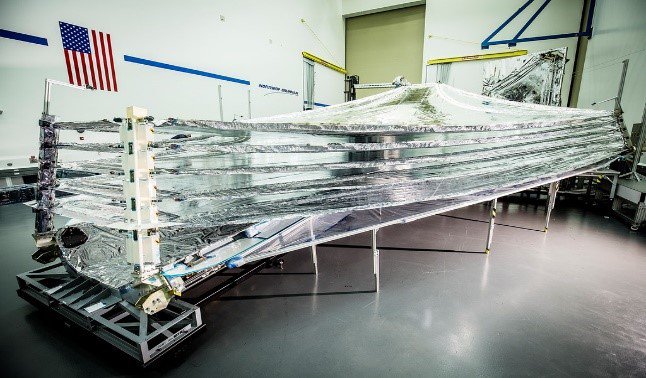 Vishwesvaran Sundar
Secondary mirror
It's round mirror located the end of the long booms,
Is the second surface the light from the cosmos hits
• Secondary mirror is 0.74 m in diameter
• Which are folded into their launch configuration.
• The mirror would then unfold after launch.
• They are hollow composite tubes, and the material is about 40-thousandths of an inch (about 1 millimeter) thick.
• Reflective of near-infrared light secondary
Vishwesvaran SundarPrimary mirror
Reflecting telescope is a spherical or parabolic shaped
A 6.5 meter (21’ 4”) mirror
Weighs approximately 20 kilograms (46 pounds)
Collects infrared light
Gold coating and al coating
Accuracy result
Composed of 18 hexagonal segments (unfold after the telescope is launched)
126 small motors to occasionally adjust the optics (lack of environmental disturbances)
Glass or other material coated
Vishwesvaran Sundar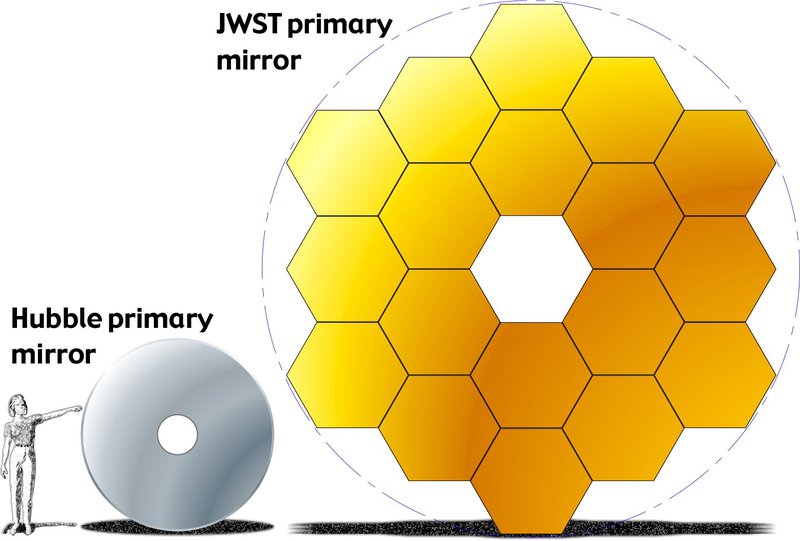 Vishwesvaran Sundar
 Vishwesvaran Sundar
Mid-Infrared Instrument (MIRI)
• Types of material
• mercury-cadmium-telluride
• arsenic doped silicon (0.6-5 μm)
• Detection of 5-28 μm
• The mid-infrared detectors have about 1 million pixels each
• The Mid-Infrared Instrument (MIRI) has both a camera and a spectrograph that sees light in the mid-infrared region of the electromagnetic spectrum, with wavelengths that are longer than our eyes see.
• MIRI covers the wavelength range of 5 to 28 microns.
• Its sensitive detectors will allow it to see the red shifted
• light of distant galaxies,
• newly forming stars, and
• faintly visible comets as well as objects in the Kuiper Belt.( object composed) Methane and ammonia and water
• MIRI's camera will provide wide-field, broadband imaging that will continue the breathtaking astrophotography that has made Hubble so universally admired.
Vishwesvaran Sundar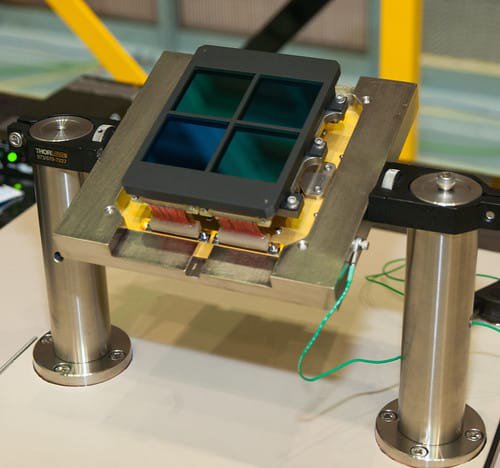 Vishwesvaran Sundar
Near InfraRed Spectrograph (NIRSpec)
· Wavelength range 0.95-2.5 microns, 46" x 46"; Pixel scale = 0.183"/pixel
· A spectrograph (also sometimes called a spectrometer) is used to disperse light from an object into a spectrum.
· Analyzing the spectrum of an object about
o its physical properties,
o including temperature,
o mass, and
o chemical composition.
· The atoms and molecules in the object actually imprint lines on its spectrum that uniquely fingerprint each chemical element present and can reveal a wealth of information about physical conditions in the object.
Vishwesvaran Sundar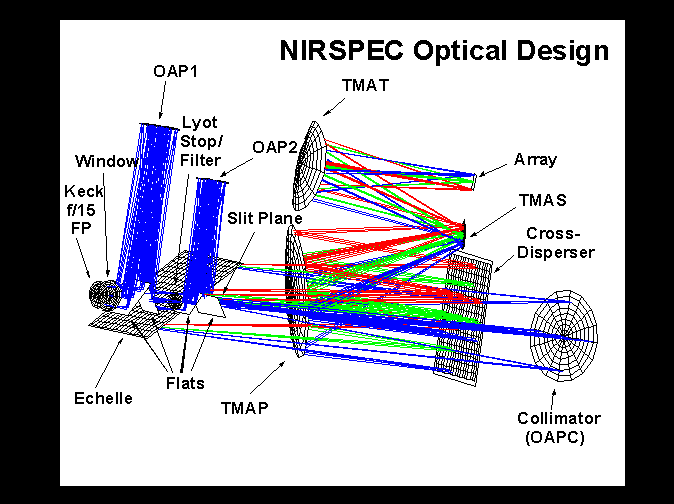 Vishwesvaran Sundar
Near-Infrared Camera, or NIRCam
• (NIRCam) is Webb's primary imager that will cover the infrared wavelength range 0.6 to 5 microns.
• infrared detectors by producing arrays that are
• lower noise,
• larger format,
• longer lasting than their predecessors
• NIRCam will detect light from:
• the earliest stars and galaxies in the process of formation,
• the population of stars in nearby galaxies,
• As well as young stars in the Milky Way and Kuiper Belt objects.
• NIRCam is equipped with
• instruments that allow astronomers to take pictures of very faint objects around a central bright object,
• like stellar systems.
• With the coronagraphs, astronomers hope to determine the characteristics of planets orbiting nearby stars.
Light is collected in the purple mercury-cadmium-telluride film
Vishwesvaran Sundar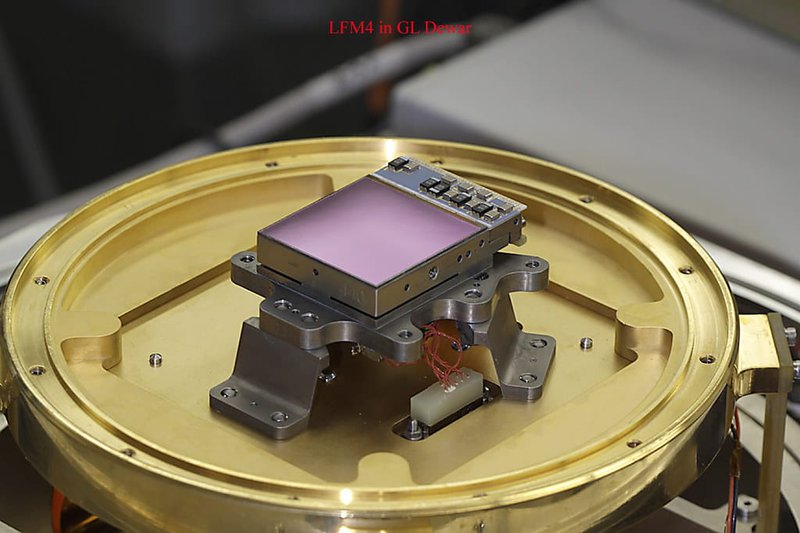 Vishwesvaran Sundar
Spectrographs
Spectrograph to determine characteristics such as
· temperature,
· density,
· chemical composition and
· velocity
Types
· Cosmic Origins Spectrograph (COS) and
· The Space Telescope Imaging Spectrograph (STIS).
Vishwesvaran Sundar Pratheek v salian
 Pratheek v salian
 Pratheek v salian
 Vasishtha Rajenavara
 Ajay Gangadharan